
Industrial Concrete Services in Atlanta
-
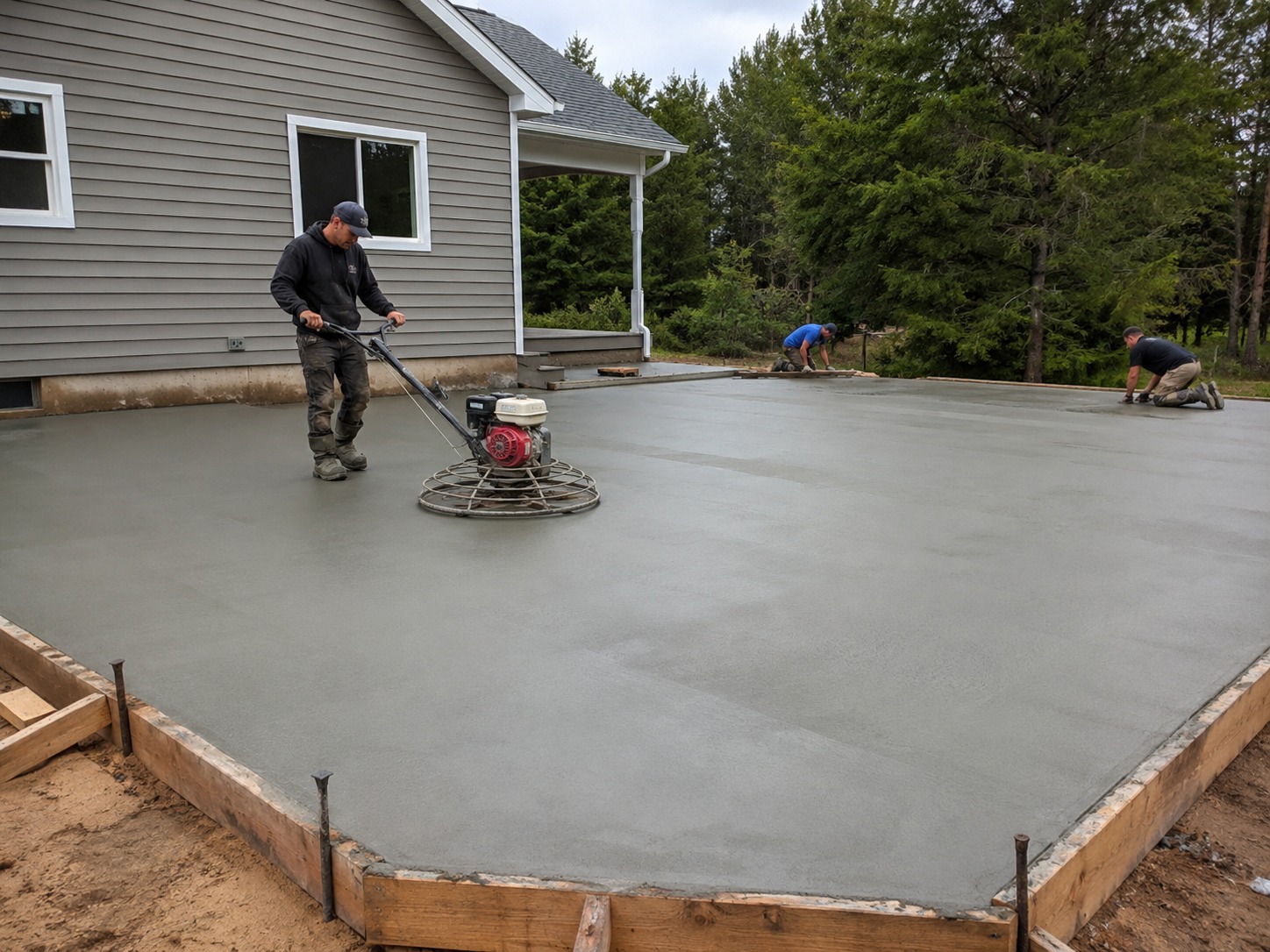
Warehouse and Distribution Center Slabs
Heavy-duty slabs engineered for racking loads, forklift traffic, and tight FF/FL flatness tolerances, built for logistics facilities across the Atlanta metro.
-
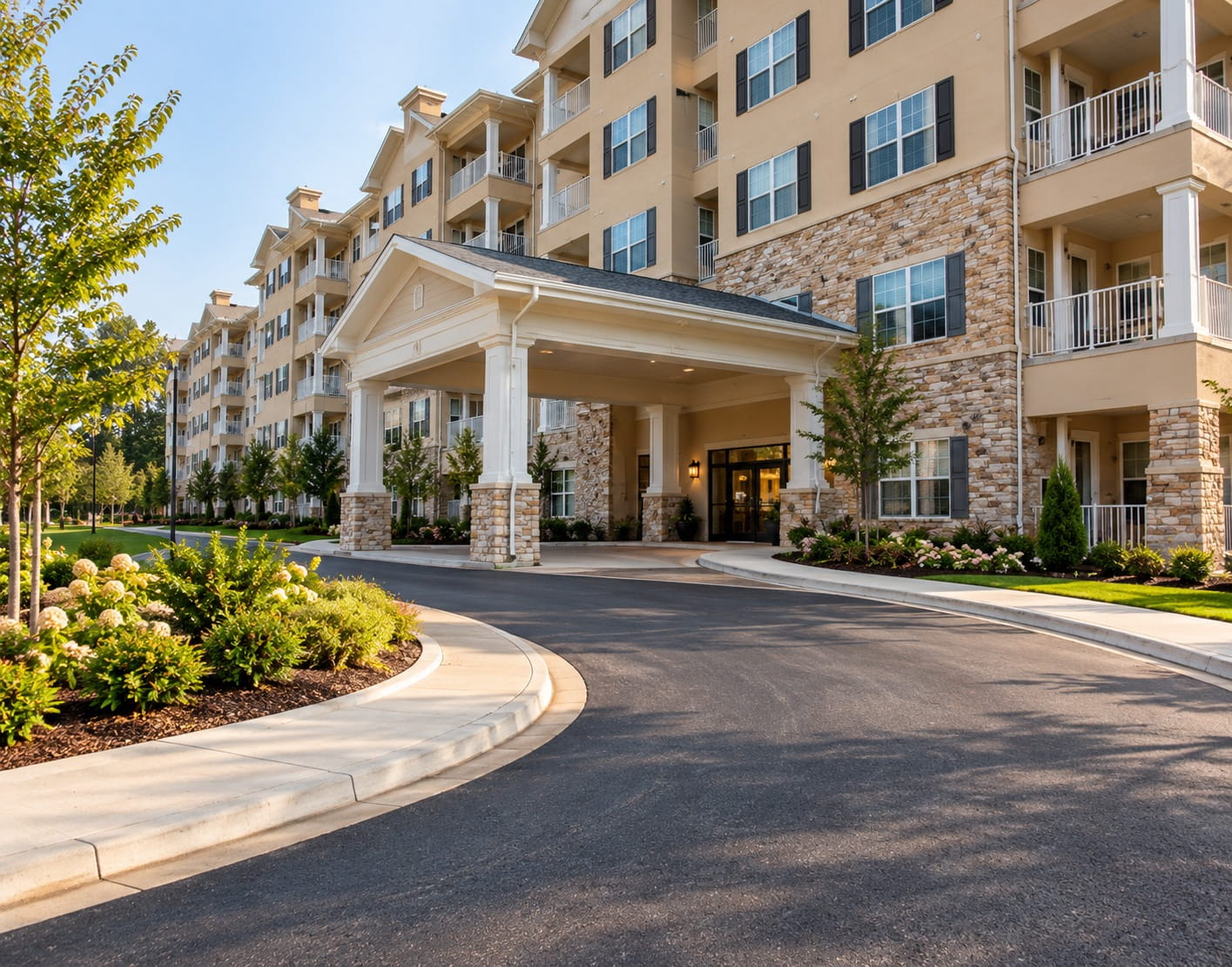
Tilt-Wall Construction
Precision-cast and erected concrete wall panels for warehouses, manufacturing plants, and cold storage buildings, delivering speed, strength, and fire resistance.
-
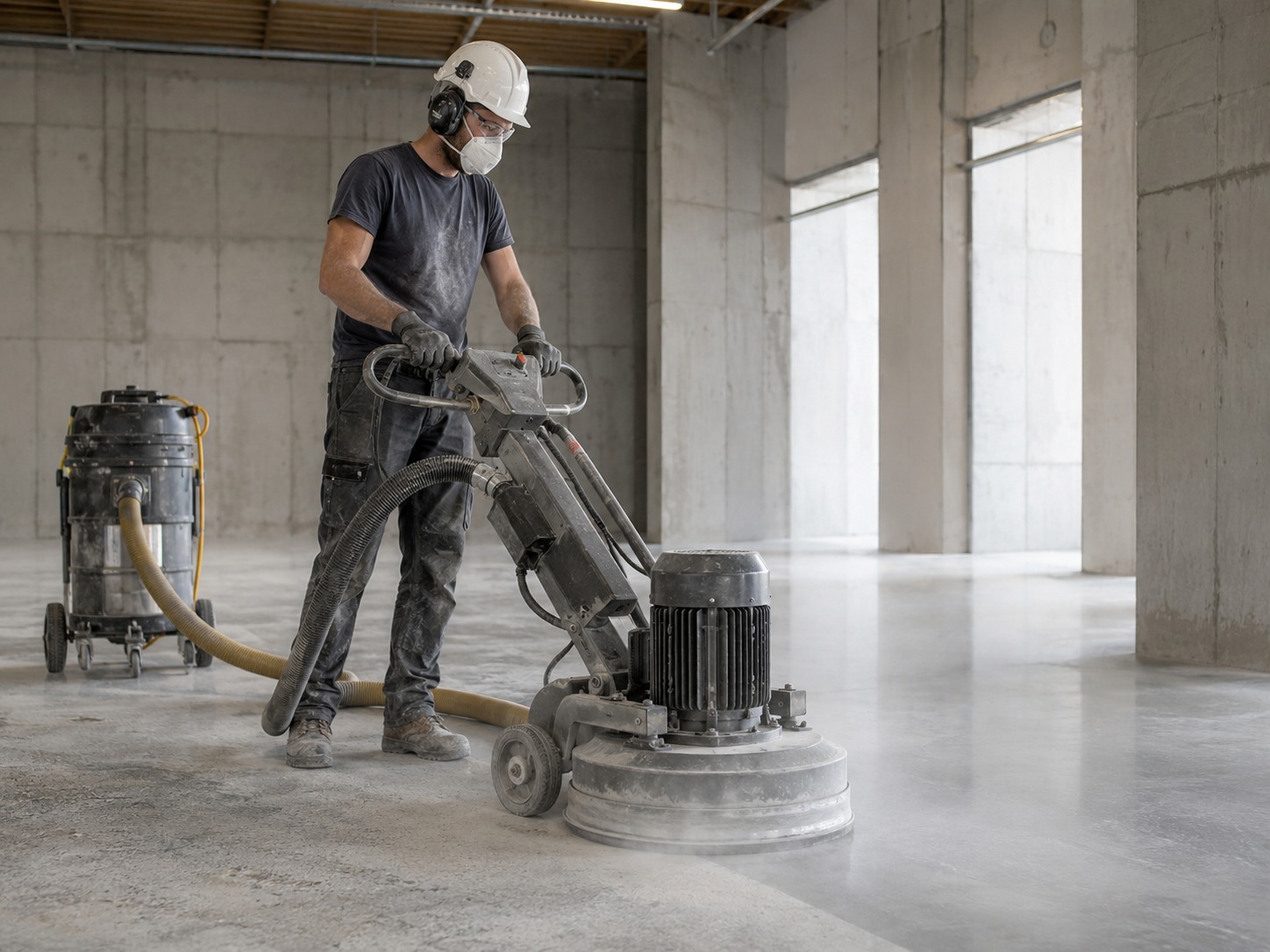
Industrial Floor Repair and Resurfacing
Joint rebuilding, crack repair, spall patching, and resurfacing that restore damaged floors and keep operations running with minimal downtime.
-
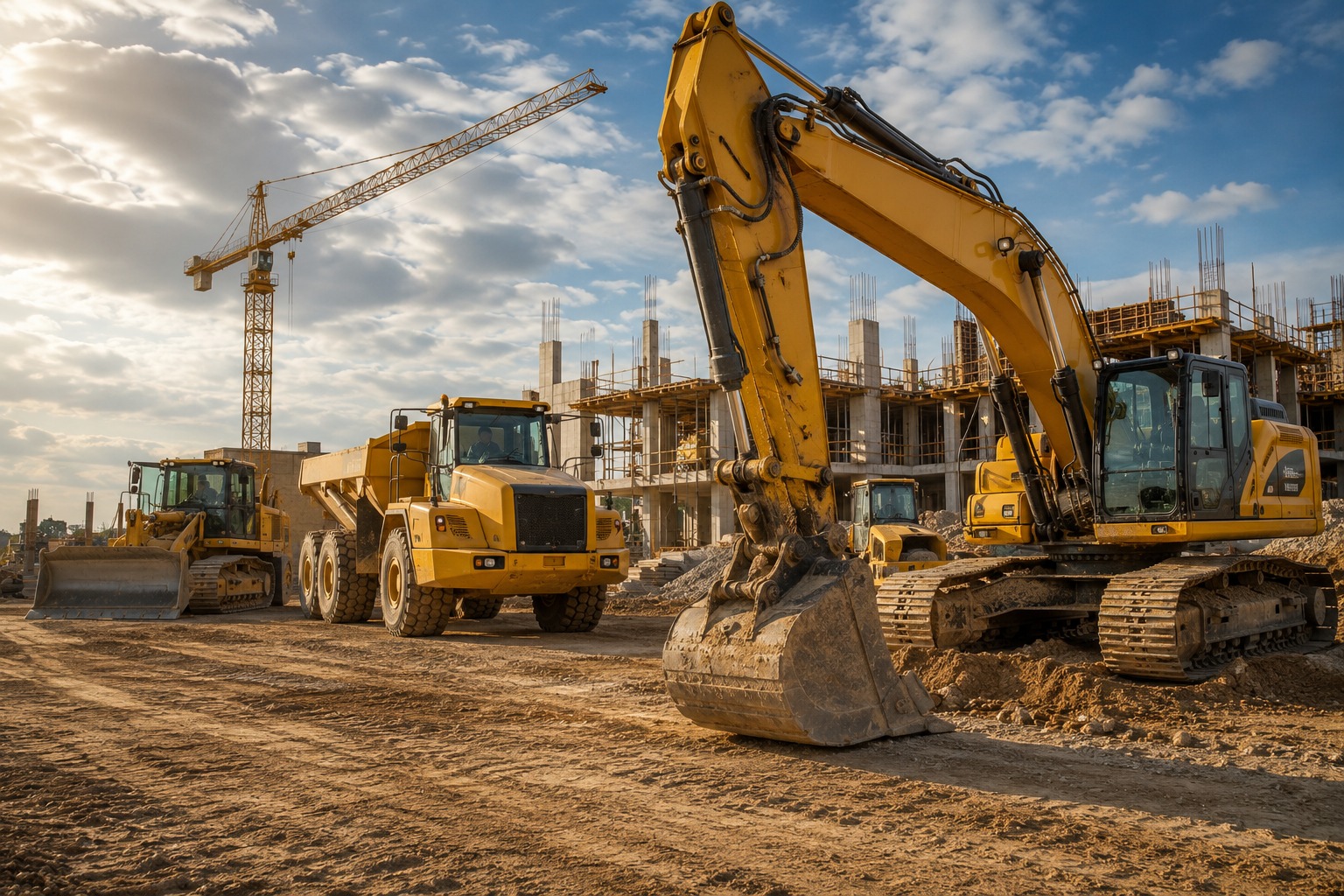
Equipment Pads and Machine Foundations
Reinforced pads and foundations for presses, compressors, generators, and heavy machinery, designed to handle vibration, point loads, and long-term settlement.
-
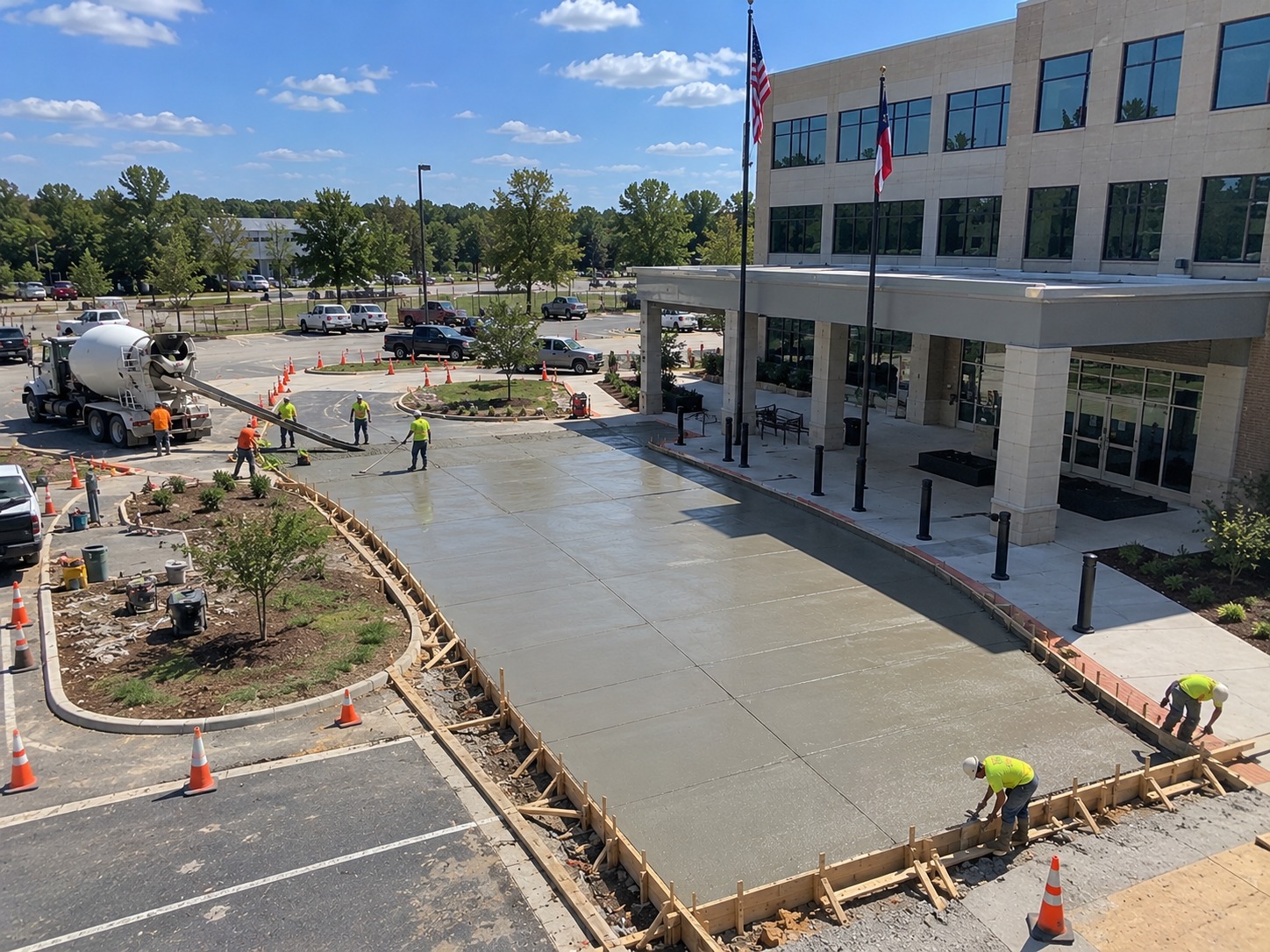
Loading Docks and Truck Courts
Durable dock aprons, dolly pads, and concrete truck courts built to withstand constant trailer traffic, heavy axle loads, and Georgia’s rain.
-
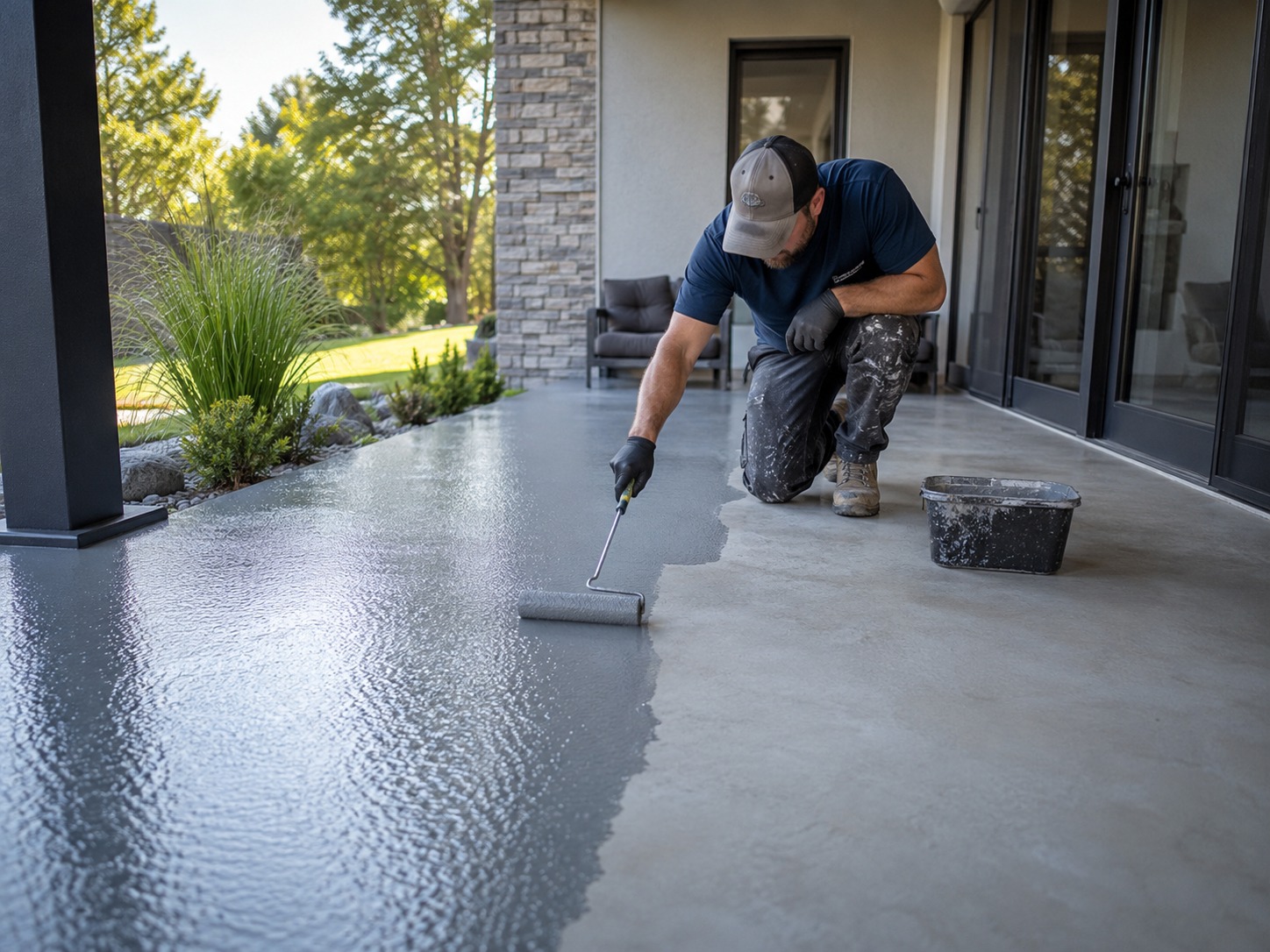
Chemical-Resistant and Containment Concrete
Secondary containment, sealed slabs, and protective coatings for facilities that store or handle chemicals, fuels, and process liquids.
Why Choose Our Industrial Concrete Contractors in Atlanta
-
We Build to Engineered Specification
Strength, rebar, dowels and joint spacing are specified for your floor’s loads. We build to the drawings exactly, raising any site conflict with the engineer.
-
Flatness and Levelness You Can Measure
Warehouse aisles live or die on their FF and FL numbers. We place and finish to the specified tolerances, then profile and document the floor.
-
Joint Detailing That Survives Forklifts
Most industrial floors fail at the joints. We dowel, arm and fill them against spalling, laying them out so forklift wheels cross supported edges.
-
Mix Designs for the Job
A crane pad, a containment bund and a high-tolerance aisle are different problems. We match the mix — strength, aggregate, admixtures, resistance — to each duty.
-
We Work Around Your Operation
Shutting a warehouse costs more than the concrete. We phase pours bay by bay, work nights and weekends, and sequence curing so aisles reopen promptly.
-
Licensed, Insured and Documented
Industrial work carries real liability and inspection requirements. We are a fully licensed and insured Atlanta contractor, break test cylinders, and keep placement records.

Industrial Concrete Market Gallery
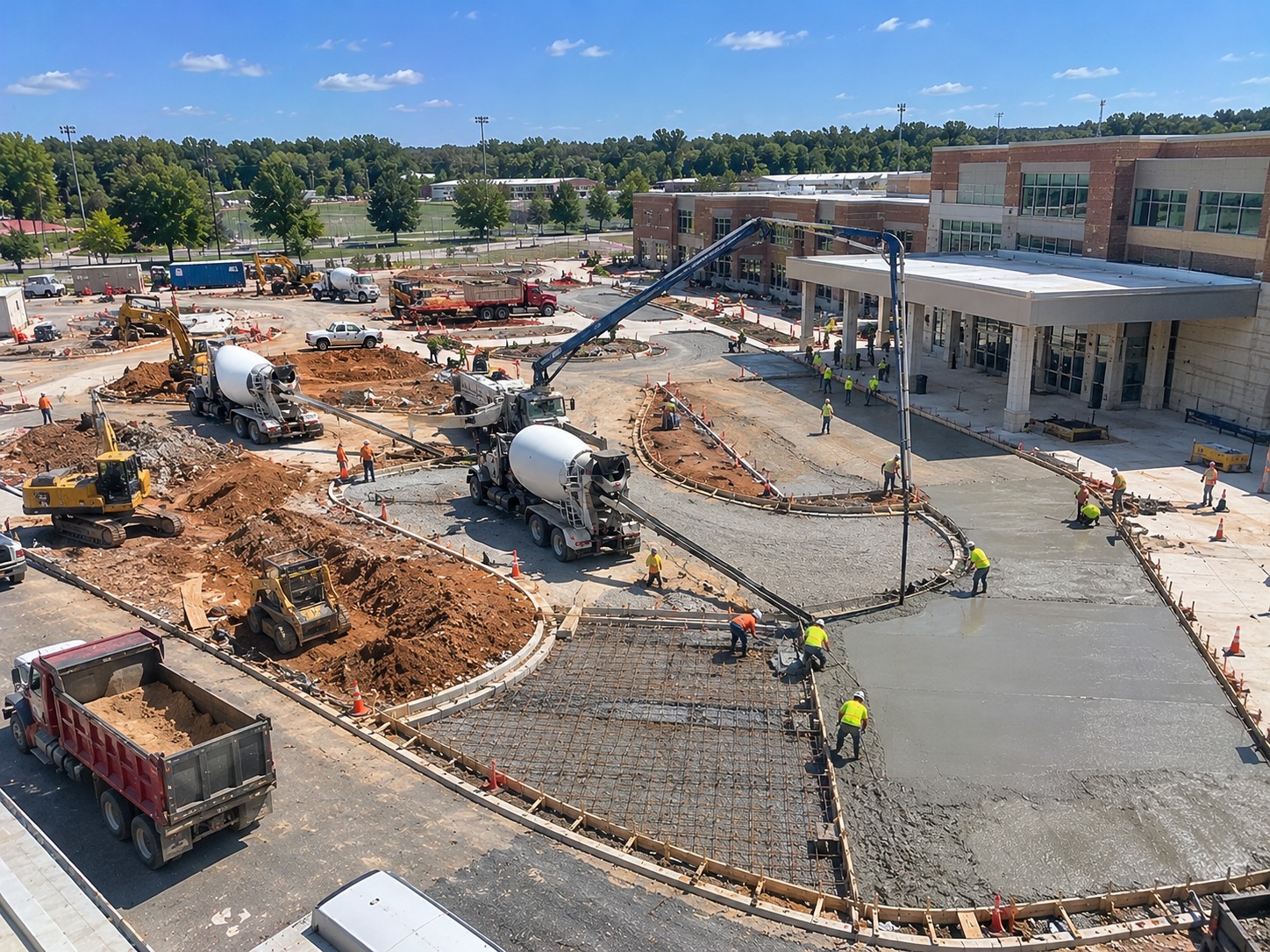
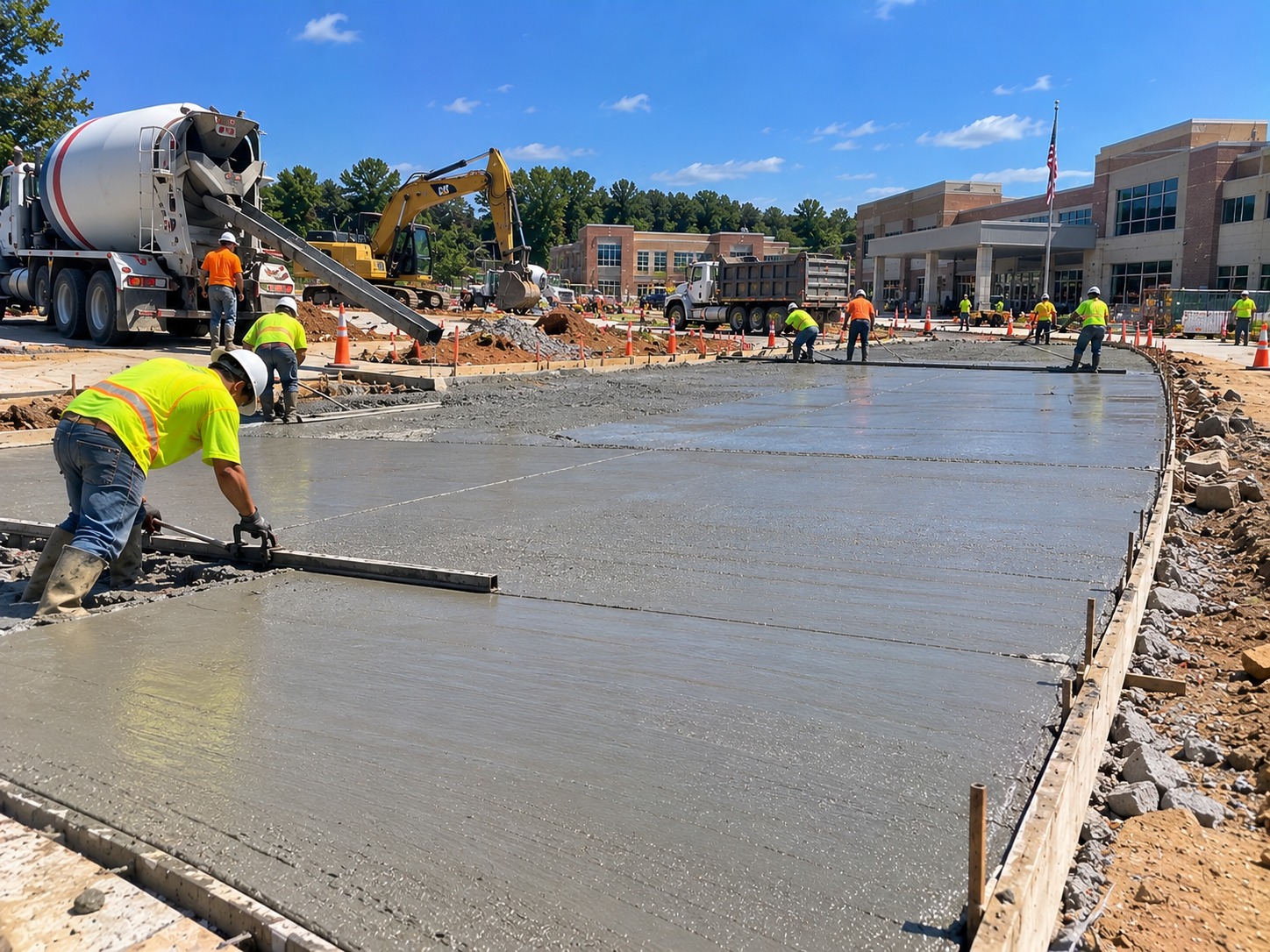
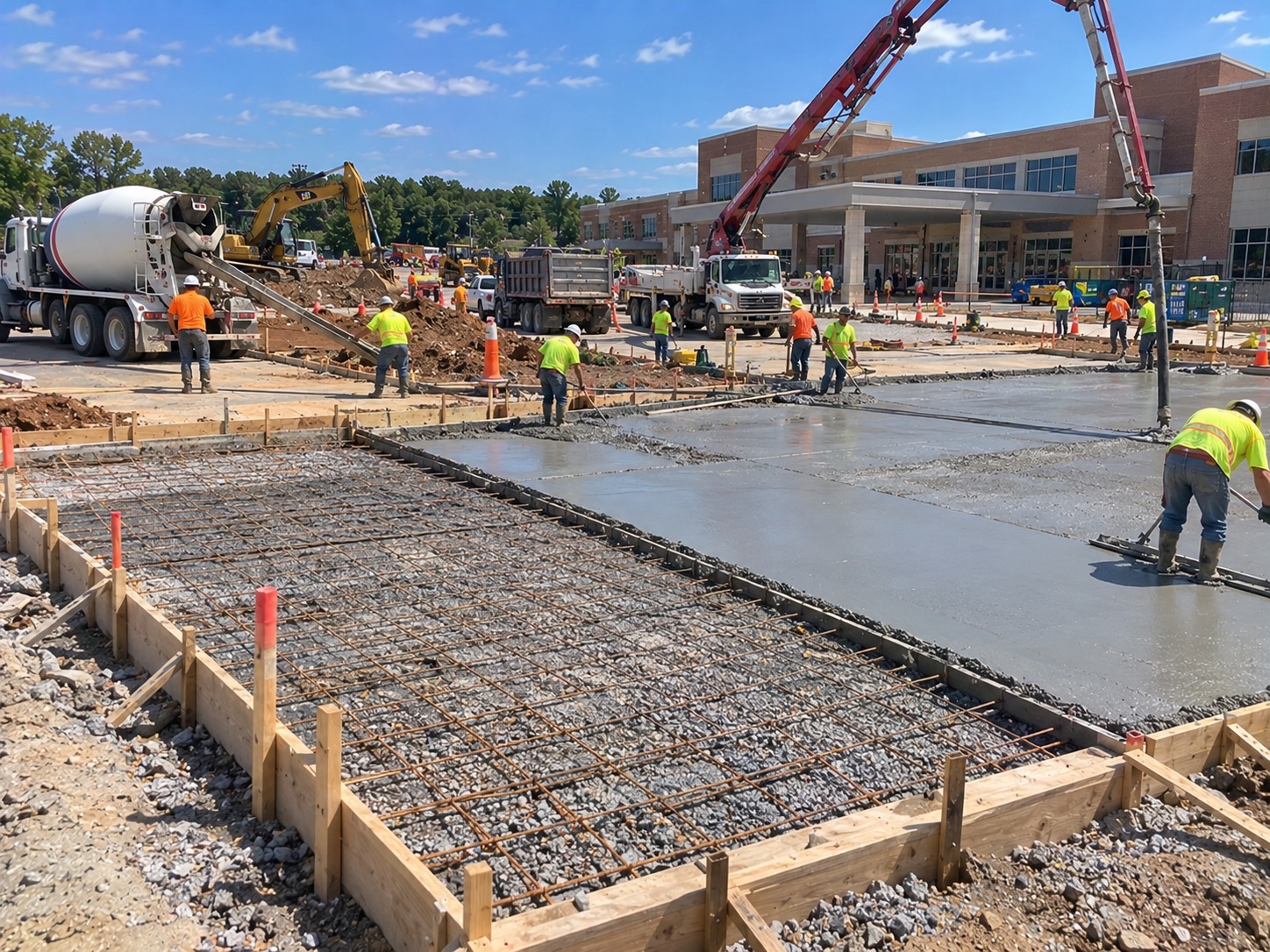
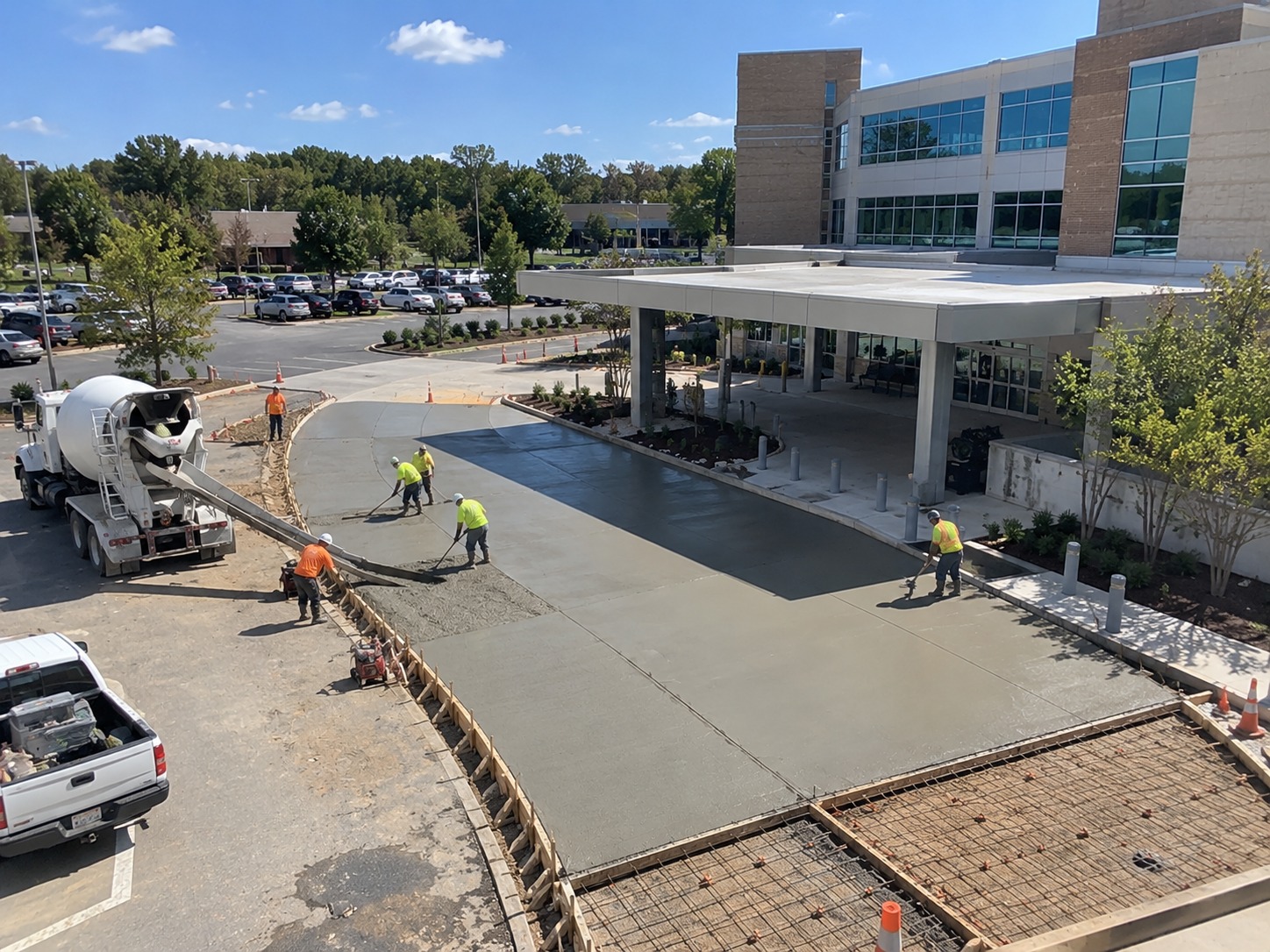
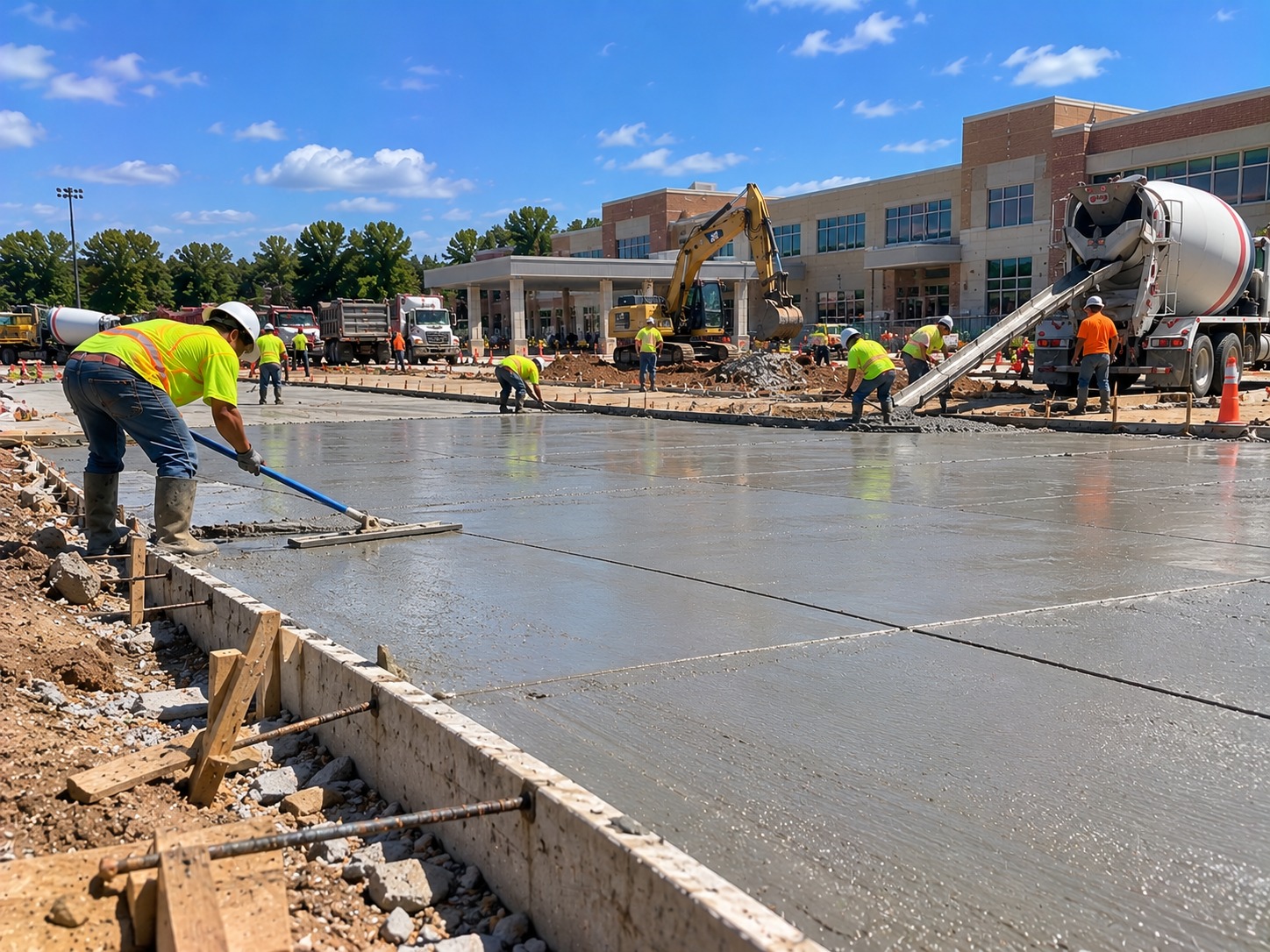
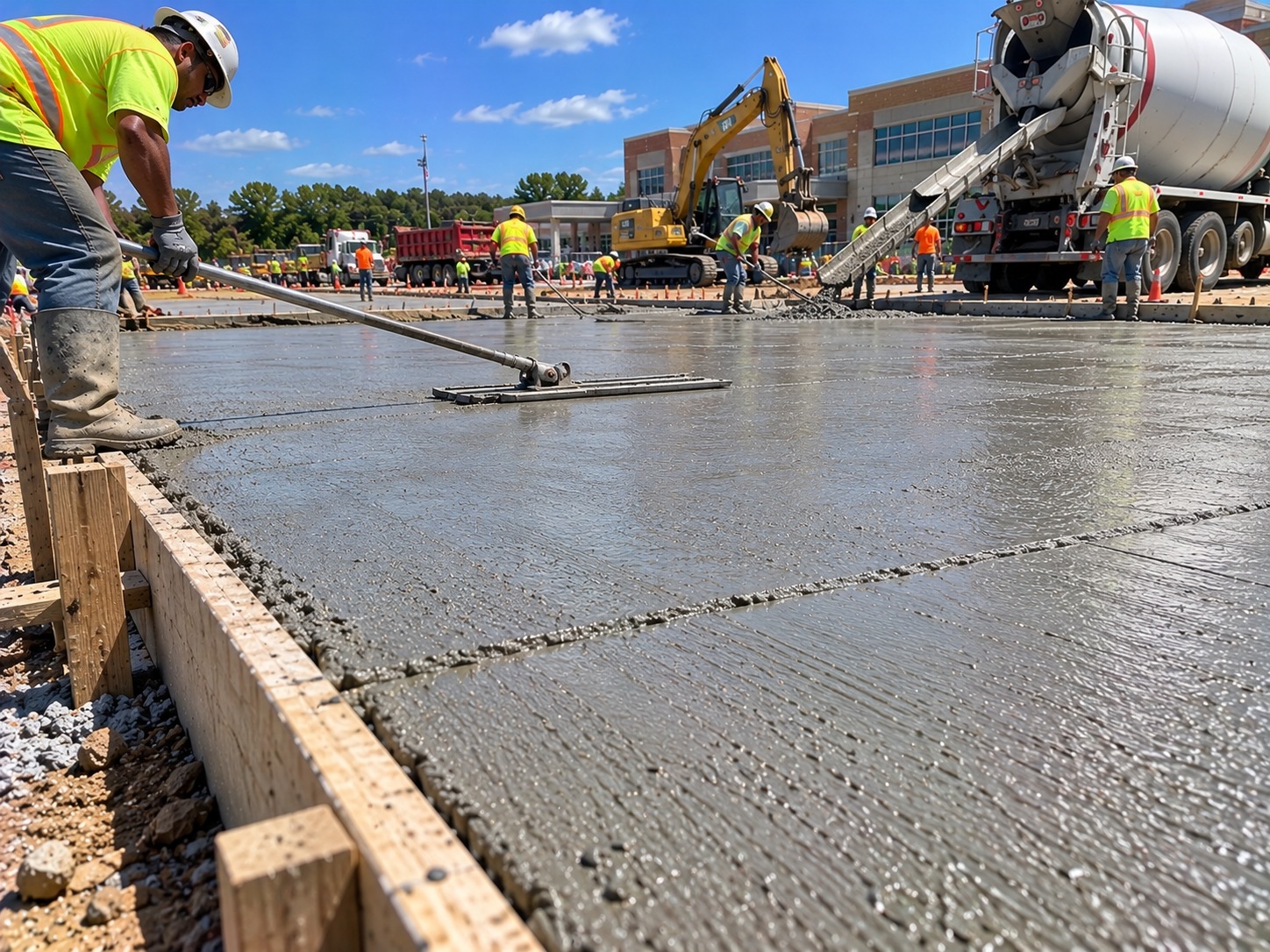
A look at recent concrete projects across metro Atlanta — large-scale pours, access routes and heavy-duty surfaces built to perform for years.
Industrial Concrete FAQs
What FF and FL flatness tolerances can you achieve?
It depends on the floor’s duty. Random-traffic warehouse slabs typically target overall numbers around FF35/FL25, while narrow-aisle defined-traffic floors serving high-reach order pickers call for tighter, aisle-specific profiles. We place and finish to the specified tolerances using straightedging or laser screeding as the figures demand, then have the floor profiled by a third party and give you the report, so the result is measured rather than assumed.
How do you design a slab for forklift and racking loads?
We work from your rated loads — racking leg reactions, forklift axle and wheel loads, and any point loads — and the engineer’s design. Slab thickness, concrete strength, sub-base support and reinforcement or dowels are all sized against those numbers. Joints are laid out and dowelled so hard wheels cross supported edges, which is what stops the spalling and cracking that otherwise appears within the first year of heavy traffic.
Can you pour without shutting our whole facility down?
Almost always, yes. We phase industrial pours bay by bay or aisle by aisle, work nights and weekends where it keeps you operational, and sequence saw-cutting and curing so reopening is predictable. Before we start we map which areas go offline and for how long, agree a programme around your shifts, and stage materials and access so a live zone stays usable while the neighbouring bay cures.
How do you make industrial floors resist chemicals and abrasion?
We match the solution to the exposure. That can mean a denser, lower-permeability mix, a specified abrasion-resistant aggregate or dry-shake surface hardener, and chemical-resistant sealers or coatings for process and containment areas. Joints in containment zones are detailed and filled to hold liquid. We confirm what your floor will actually be exposed to, then specify a surface and mix that stands up to those wheel loads and chemicals rather than a generic finish.
How long before an industrial slab takes heavy traffic?
Concrete reaches most of its design strength around twenty-eight days, and full forklift and racking loads are generally held until it has. Lighter foot and site traffic can usually resume within a few days. Where downtime is critical we can specify fast-track mixes and break test cylinders at seven and twenty-eight days, so the decision to load the floor rests on measured strength data, not the calendar alone.