
Why Choose Our Paver Patio Contractors in Atlanta
-
The Base Gets the Attention
We excavate to proper depth, lay aggregate in lifts and compact each one. It is the least glamorous part of the job and the single biggest reason a patio is still flat in ten years.
-
Drainage Designed In
Every patio we build sheds water away from the house at a deliberate fall. Atlanta rain arrives in volume, and a patio that ponds or drains toward your foundation is a problem, not a feature.
-
Proper Edge Restraint
Without solid edging, pavers migrate outward and joints open up. We install proper restraint on every perimeter, which is exactly the detail budget installations quietly leave out.
-
Patterns and Materials That Suit
Herringbone, running bond, flagstone or tumbled setts all read differently and perform differently underfoot. We show you options against your home and help you choose confidently.
-
Polymeric Joints, Fewer Weeds
We finish with jointing that locks the surface and resists washout and weed growth, so your patio still looks maintained after a couple of Atlanta summers rather than sprouting through.
-
Tidy, Contained Sites
Patio work means excavation, spoil and deliveries. We protect access routes, keep material contained and clear the site properly, because the garden around the patio matters too.
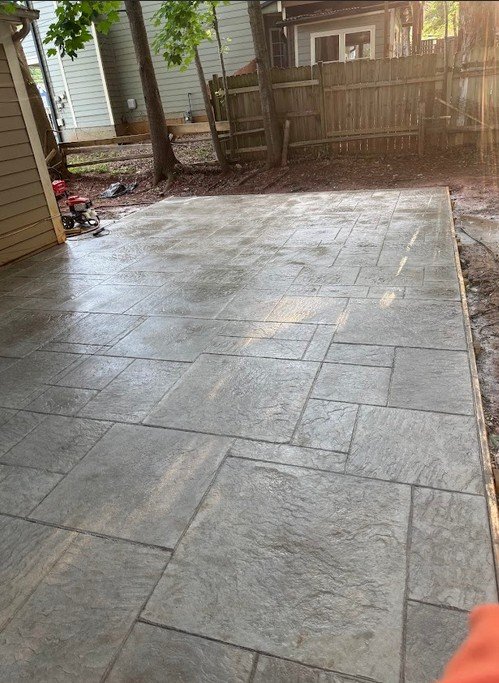
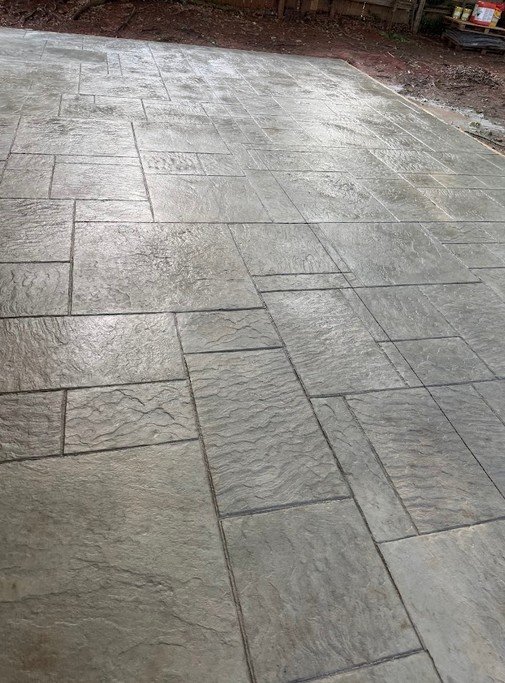
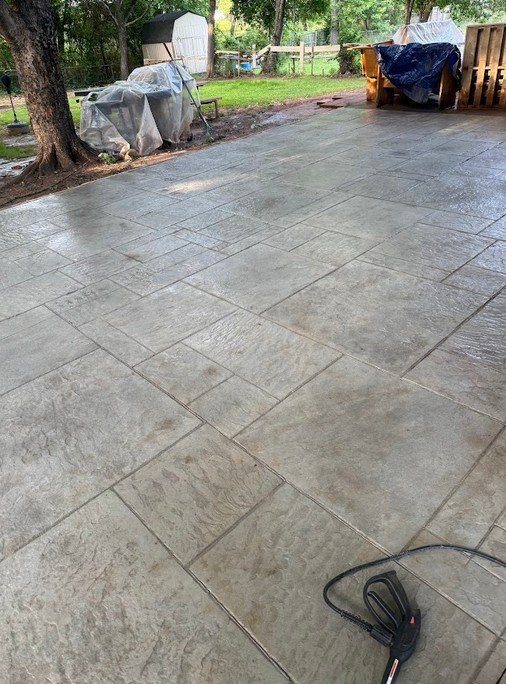
Our Paver Patio Work in Atlanta
6 Reasons to Choose Paver Patios in Atlanta
-
They Handle Clay Movement
Georgia clay swells and shrinks with the seasons. Individual pavers on a flexible base ride that movement, where a monolithic concrete slab in the same conditions eventually cracks through.
-
Repairs Are Simple and Cheap
Stain one paver or damage a small area and you lift and replace just those units. With poured concrete the equivalent repair is a visible patch or a full section replacement.
-
Grip When It Rains
Textured pavers offer far better footing than smooth poured concrete during Atlanta’s heavy summer downpours, which matters most around steps, pool surrounds and sloped approaches.
-
Usable Immediately
There is no curing period. Once the jointing sand is in and compacted, you can put furniture out and walk on it the same day, rather than fencing it off for a week.
-
Genuine Design Freedom
Colour, shape, pattern, borders and inlays give you enormous control over how a patio looks. Curves and custom edges are straightforward with pavers and awkward with poured concrete.
-
Strong Resale Appeal
A well-laid paver patio photographs beautifully and reads to Atlanta buyers as a finished outdoor living space, which is consistently one of the most requested features in this market.
6 Qualities of a Good Paver Patio Expert in Atlanta
-
They Tell You the Base Depth
Ask how deep they excavate and how the aggregate is compacted. A specific answer signals someone who builds properly; vagueness here is the clearest warning sign in the whole trade.
-
They Discuss the Fall
A patio must slope away from the house. Any contractor who does not mention drainage direction before quoting has not thought about where Atlanta’s rain is going to end up.
-
They Include Edge Restraint
Check the quote names it. Edging is easy to omit to win a job on price, and its absence is precisely why cheap patios spread and open at the perimeter within a few years.
-
They Show Material Samples
Paver colour on a screen is not paver colour in Atlanta sunlight. A good contractor brings samples on site so you see them against your house before committing to an order.
-
They Plan for Utilities
Excavation means locating services first. Professionals arrange utility marking as routine rather than discovering a line with a machine bucket halfway through the dig.
-
They Guarantee Settlement
Confidence in base preparation shows up as a written workmanship warranty covering settlement. If nobody will guarantee the surface stays level, ask yourself why not.
Cost of Paver Patios in Atlanta
Paver patios in Atlanta typically cost $15 to $40 per square foot installed, putting a 300-square-foot patio between $4,500 and $12,000. Concrete pavers sit at the affordable end, clay brick in the middle and natural stone at the premium end. Excavation depth, site access and how much the ground has to be regraded all adjust the figure.
For most Atlanta yards pavers earn their premium over poured concrete, because they flex with clay soil movement instead of cracking, and individual units can be lifted and replaced without disturbing the rest. Patios that fail early almost always trace back to inadequate base preparation rather than to the pavers themselves, which rarely wear out at all.
Atlanta Paver Patios Cost Breakdown
| Project Type | Typical Cost Range | Notes |
|---|---|---|
| Concrete pavers, installed | $15–$26 per sq ft | Most popular; wide range of styles |
| Clay brick pavers, installed | $20–$34 per sq ft | Colour is through the unit, so it never fades |
| Natural stone, installed | $26–$50 per sq ft | Flagstone and travertine at the upper end |
| Typical patio (300 sq ft) | $4,500–$12,000 | Three to seven days on site |
| Excavation and compacted base | $3–$7 per sq ft | Deeper on clay; the part that determines life |
| Edge restraint | $5–$12 per linear ft | Stops the field spreading over time |
| Seat wall | $60–$140 per linear ft | Adds seating without furniture |
| Polymeric jointing sand | $1–$3 per sq ft | Keeps weeds out; top up every few years |
Please note this is only an estimate. You can get a more accurate quote when you call our team or provide specific project details in our contact form.
Paver Patios FAQs
Are paver patios better than concrete in Atlanta?
For most Atlanta yards, yes. Pavers flex with clay soil movement instead of cracking, individual units can be lifted and replaced, and the finished look is far more varied. Poured concrete costs less upfront and suits large, simple areas where appearance matters less than the price per foot.
How much does a paver patio cost in Atlanta?
Cost depends on square footage, paver type, site access and how much excavation the ground needs. Concrete pavers sit at the affordable end and natural stone at the premium end. We measure the area, assess access and provide an itemised written quote covering base, pavers and edge restraint.
How long does a paver patio last?
On a properly compacted base with edge restraint and good drainage, expect decades of service, and individual damaged pavers can be swapped without disturbing the rest. Patios that fail early almost always trace back to inadequate base preparation rather than to the pavers themselves, which rarely wear out.
Do paver patios need much maintenance?
Very little. Occasional sweeping, an annual rinse and topping up the joint sand every few years keeps them looking right. Sealing is optional and mainly helps with stain resistance and colour depth. Weeds are minimal when polymeric jointing has been installed and compacted properly in the first place.
How long does installation take?
A typical residential patio takes three to seven days depending on size, access and how much excavation is required. Because there is no curing period to wait out, you can use the surface as soon as the jointing is compacted and the site has been cleared and swept.